
What if my employer wants me to leave before my notice period, it can be confusing and stressful. You might be asking yourself:
- Is this even legal?
- Will I lose my salary if I leave early?
- Should I resign or stand my ground?
You’re not alone. Many people facing this situation search things like “employer trying to force me to quit” or “company forcing me to resign” because they feel pressured and unsure about their rights.
In this guide, you’ll get clear, practical answers based on Indian workplace laws. More importantly, you’ll understand exactly what steps to take next so you can protect your job, your money, and your peace of mind.
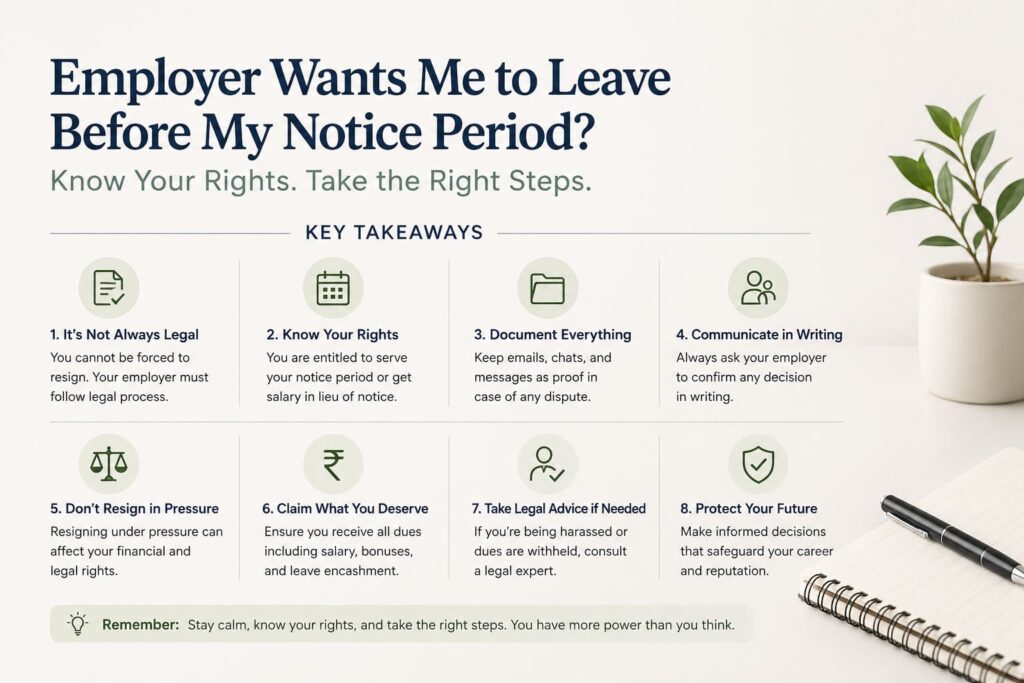
Why Is Your Employer Asking You to Leave Early?
Before reacting, it is important to understand why this is happening. In most cases, employers don’t openly explain the real reason.
Here are common situations:
- Cost cutting or layoffs – Company wants to reduce expenses quickly
- Performance concerns – Instead of formal termination, they push resignation
- Replacement already hired – They no longer need your role
- Workplace conflict or politics
- Urgent exit requirement – Client or business decision
Sometimes, the employer may not say it directly but may create pressure. This is when employees feel like the employer is forcing me to quit.
Is It Legal for an Employer to Ask You to Leave Before Notice Period in India?
This is the most important question.
The short answer:
Yes, but only under certain conditions.
Your notice period is usually governed by your employment contract (offer letter).
In India, an employer generally has two legal options:
- Allow you to serve the full notice period, OR
- Pay you salary instead of notice (notice pay)
If your employer asks you to leave immediately without paying for the remaining notice period, that can be unfair and possibly illegal.
When it is legal:
- If your contract allows early exit with salary compensation
- If both you and employer agree
- In cases of serious misconduct (with proper process)
When it may be illegal or unfair:
- You are forced to resign without reason
- No salary is paid for remaining notice
- You are pressured or threatened
This is where situations like “employer forcing me to resign” or “my employer wants me to quit suddenly” come into play.
What Does “Forced Resignation” Actually Mean?
Forced resignation is not always direct. It often happens indirectly.
Common signs:
- Manager says: “Resign or we will terminate you”
- Sudden negative feedback without warning
- Work responsibilities removed
- Isolation from team
- Continuous pressure to quit
For example:
You have been working normally, but suddenly your manager tells you to resign immediately without explanation. If you don’t, they threaten termination.
This is a classic case where employees feel the company is forcing them to resign.
What Happens If You Refuse to Leave?
Many employees think they have no option. That is not true.
If you refuse:
- The employer may proceed with formal termination
- They may try to negotiate terms
- They may continue creating pressure
But here’s the important part:
They cannot simply remove you without following due process or without paying dues.
Even if termination happens, you still have rights regarding:
- Notice pay
- Full and final settlement
- Experience letter
If you are unsure about your dues, you can also refer to your rights explained in full and final settlement law in India, which helps you understand what payments you should receive after exit.

What Are Your Rights as an Employee in India?
You don’t need to know complicated laws. Just remember these practical rights:
1. Right to Notice Period or Salary
If employer ends your job early, they should compensate you.
2. Right Against Unfair Pressure
You cannot be forced to resign through threats or harassment.
3. Right to Documentation
Always ask for written communication.
4. Right to Receive All Dues
This includes:
- Salary
- Bonus (if applicable)
- Leave encashment
If your employer is already delaying payments, you should also know what to do in such cases. You can check practical steps in employer not paying salary: legal steps to recover your salary.
What Should You Do Now? (Step-by-Step Guidance)
This is the most important part. If you are currently facing this situation, follow these steps carefully.
1. Do Not Resign Immediately
Do not act under pressure. Once you resign, your legal position becomes weaker.
2. Ask for Written Communication
Politely ask:
“Can you please confirm this in writing?”
This protects you.
3. Check Your Offer Letter
Look for:
- Notice period clause
- Exit terms
- Compensation rules
You should clearly understand your rights related to notice. If you are confused, read about notice period buyout in India to understand how early exit works legally.
4. Keep Records of Everything
Save:
- Emails
- WhatsApp chats
- Meeting notes
This can help if things escalate.
5. Speak to HR Calmly
Ask:
- Why am I being asked to leave early?
- Will I be paid for notice period?
Sometimes HR resolves things.
6. Negotiate Smartly
If you are open to leaving, negotiate:
- Full salary for notice period
- Early relieving letter
- Positive experience letter
7. Consider Legal Help (If Needed)
If:
- You are being forced
- Salary is not paid
- You feel harassed
Then speaking to a legal professional can help you take the right action.
Can You Get Salary or Compensation?
Yes, in many cases.
If the employer wants you to leave immediately, they should:
- Pay salary for remaining notice period
- Settle all dues
- Provide relieving documents
For example:
If your notice period is 60 days and you are asked to leave in 10 days, you may be entitled to payment for remaining 50 days.
When Should You Accept Early Exit?
Not every situation needs a fight.
You can consider accepting if:
- You already have another job
- Employer offers fair compensation
- Workplace has become toxic
- Exit terms are clear and documented
The key is:
Do not leave empty-handed or under pressure.
Employee Rights • HR Disputes • Labour Law Guide
Stuck between a new job offer and a long notice period?
Many employees in India face pressure from HR during resignation. Salary deductions, relieving letter delays, notice recovery, and buyout confusion can quickly become stressful. Before taking any emotional decision, understand your legal rights, practical risks, and the proper notice period buyout process.
Learn how notice period buyout works in India, how companies calculate recovery amounts, whether employers can reject your request, and what employees should do to avoid future HR or legal complications.
Real-Life Situations You Might Relate To
Situation 1:
Your manager says:
“Resign today or we will terminate you.”
Don’t panic. Ask for written explanation.
Situation 2:
Company suddenly asks you to leave without notice.
Check if they are paying notice salary.
Situation 3:
You are being sidelined and pushed to quit.
This may be indirect pressure. Start documenting everything.
Common Mistakes Employees Make
Avoid these mistakes:
- Resigning out of fear
- Not reading contract
- Accepting verbal promises
- Not asking for written confirmation
- Leaving without settlement
These mistakes can cost you money and future opportunities.
FAQs (Questions People Commonly Ask Lawyers)
No, they cannot legally force you to resign. They can terminate employment, but proper process and compensation must be followed.
They should either allow you to serve notice or pay salary in lieu of notice.
Only in specific cases like misconduct, and even then, proper procedure is required.
Do not resign immediately. Ask for written communication and check your contract.
Forced resignation through pressure or threats is generally considered unfair and can be challenged.
When Should You Talk to a Lawyer?
You should consider legal advice if:
- You are forced to resign
- Salary is withheld
- Employer refuses to pay notice period
- You are facing harassment
Even a small step like sending a legal notice can change the situation.
What Should You Do Now?
If you are currently facing this issue, follow this simple approach:
- Stay calm
- Do not resign under pressure
- Ask for written communication
- Check your contract
- Protect your financial rights
Most importantly, do not make a rushed decision.
Final Thoughts
If your employer wants you to leave before your notice period, it does not automatically mean you have to accept it blindly.
You have rights.
You have options.
The key is to act carefully, understand your position, and make a decision that protects your career and your finances.
Pingback: Notice Period Buyout in India: 2026 Rules, Salary Calculation and Legal Rights