
A SARFAESI notice can shake anyone. Especially when the borrower feels that the bank is threatening action even though the issue is related to credit card dues, temporary financial hardship, or some confusion in repayment classification. Many people in India still believe that banks can immediately seize any property once a payment is missed. That is not how the law works.
The SARFAESI Act gives significant recovery powers to banks and financial institutions, but those powers are not unlimited. There are clear legal restrictions. Certain loans, certain properties, and certain situations remain outside the scope of the Act. This is where most borrowers get confused and, honestly, banks do not always explain the distinction properly.
A person may have a regular home loan account but a default in another unsecured product like a credit card or personal loan. Suddenly recovery calls begin, legal language is used, and terms like Section 13(2), NPA classification, symbolic possession, or enforcement action start appearing. Naturally, panic follows.
The bigger question then becomes:

SARFAESI Act is not applicable to which type of loan?
The answer is not limited to one category. The applicability depends on the nature of security, the type of asset, loan amount, lender category, and legal classification of the debt.
This article explains where SARFAESI applies, where it does not apply, what borrowers should practically understand before reacting to bank notices, and how Indian courts have interpreted several grey areas over the years.
What Is SARFAESI Act in Banking?
The SARFAESI Act, 2002 stands for the Securitisation and Reconstruction of Financial Assets and Enforcement of Security Interest Act. The law allows banks and certain financial institutions to recover secured debts without first approaching a civil court.
Under this Act, if a borrower defaults and the account becomes a Non Performing Asset or NPA, the secured creditor may initiate recovery proceedings against secured assets.
Usually the process begins with a notice under Section 13(2). If the borrower fails to respond or clear dues within the prescribed period, the lender may proceed toward possession and auction of the secured asset.
But there is one thing many borrowers miss.
The law mainly revolves around secured loans. That distinction changes everything.
When SARFAESI Act Is Applicable
The Act generally applies when these conditions exist:
• The loan is secured by an asset
• The lender falls within the category of secured creditors under the Act
• The borrower account is classified as NPA according to RBI norms
• The outstanding dues cross the legally permissible threshold
• The security interest is legally enforceable
Examples where SARFAESI commonly applies:
• Home loans
• Commercial property loans
• Mortgage backed business loans
• Secured vehicle financing in certain cases
• Loans backed by tangible collateral
Even then, procedural compliance matters. A defective notice or wrongful classification may still be challenged before the Debt Recovery Tribunal.
SARFAESI Act Is Not Applicable to Which Type of Loan?
This is where things become legally interesting and practically important.
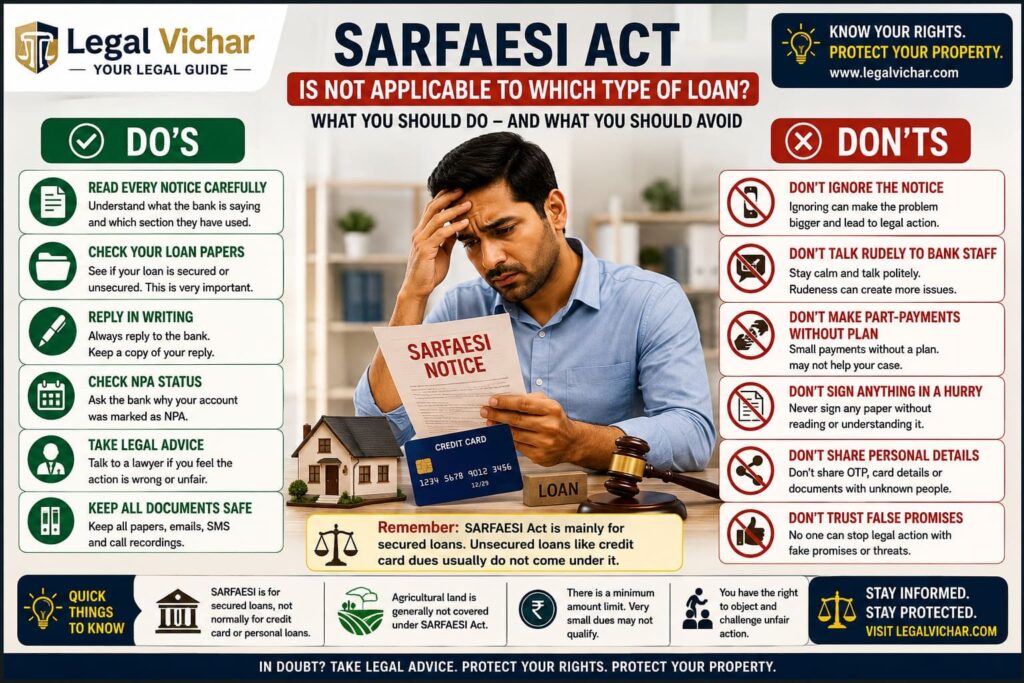
The SARFAESI Act is not applicable to which type of loan depends largely on whether the loan is secured or unsecured.
1. Unsecured Loans
SARFAESI generally does not apply to unsecured loans because there is no secured asset against which recovery action can be enforced.
Examples include:
• Most credit card dues
• Certain personal loans
• Consumer durable loans without security
• Short term digital lending products
• Salary advance loans
If a borrower defaults only in an unsecured credit card account, the bank cannot automatically invoke SARFAESI against unrelated property unless there exists some valid cross collateral arrangement or mortgage linkage.
This is where many borrowers become frightened unnecessarily.
Recovery calls and legal notices may create pressure, but recovery under SARFAESI requires enforceable security interest.
Is SARFAESI Applicable to Unsecured Loans?
In ordinary situations, no.
A bank cannot simply use SARFAESI powers for a pure unsecured debt. However, there are situations where confusion arises.
Suppose a borrower has:
• A home loan
• A credit card
• A top up secured facility
• Cross default clauses in banking documentation
Then the bank may examine the entire relationship exposure. Whether that becomes legally sustainable depends on the documentation, mortgage structure, and security agreements signed by the borrower.
This is why blindly ignoring notices becomes risky.
A borrower should immediately review:
• Loan sanction letters
• Mortgage agreements
• Security creation documents
• Cross collateral clauses
• Guarantee obligations
Many borrowers never read these papers at the time of loan approval. Later, during recovery proceedings, those clauses become critical.
What Kind of Loans Are Covered Under SARFAESI?
The law primarily covers secured financial assistance.
These include:
• Mortgage loans
• Housing finance loans
• Secured MSME loans
• Industrial finance facilities
• Property backed overdrafts
• Certain secured agricultural equipment financing
The security interest must usually involve a legally enforceable asset.
Movable and immovable properties may both become relevant depending on the financing structure.
Where Is SARFAESI Act Not Applicable?
Section 31 of the SARFAESI Act itself provides several exclusions.
The law does not apply in certain categories such as:
• Security interest in agricultural land
• Loans below statutory threshold limits
• Certain liens
• Aircraft and vessel related interests governed separately
• Conditional sale arrangements in some circumstances
• Certain pledge based transactions
One of the most misunderstood exemptions involves agricultural land.
Is SARFAESI Act Applicable to Agricultural Land?
Generally, agricultural land enjoys protection under Section 31 of the SARFAESI Act.
Banks usually cannot enforce SARFAESI proceedings against genuine agricultural land.
However, disputes often arise when:
• Land classification is disputed
• Commercial use is mixed with agricultural use
• Conversion permissions exist
• Industrial activity is taking place on the property
Courts have repeatedly examined whether the land is truly agricultural in nature or merely classified as such in records.
So borrowers should not assume automatic immunity without reviewing actual land usage and revenue documentation.
Is SARFAESI Applicable to Car Loans?
This depends on how the financing is structured.
Vehicle loans are technically secured loans because the vehicle itself acts as security. Banks may repossess the financed vehicle under contractual and legal rights.
But practical enforcement differs from mortgage enforcement involving immovable property.
Recovery practices in vehicle financing must also comply with RBI guidelines and consumer protection standards. Harassment, intimidation, or unlawful repossession may expose lenders and recovery agents to legal liability.
Is SARFAESI Applicable to Leasehold Property?
Yes, in certain situations.
Leasehold rights may become subject to enforcement if they create transferable and enforceable security interests.
However, much depends on:
• Lease agreement conditions
• Remaining lease period
• Government authority restrictions
• Transfer permissions
Many development authority properties carry transfer limitations that affect enforceability.
Is SARFAESI Applicable to Movable Property?
Yes. Security interest may exist over movable assets too.
Examples include:
• Machinery
• Equipment
• Inventory
• Vehicles
• Industrial assets
This becomes common in business financing and MSME lending.
What Is the Minimum Amount Required Under SARFAESI Act?
This is one of the most searched borrower questions online.
Under the Act, SARFAESI proceedings generally cannot be initiated where the outstanding amount is below the prescribed percentage and statutory threshold conditions.
Historically, recovery action was restricted where dues were less than twenty percent of principal and interest.
Borrowers often panic over small defaults without understanding whether the statutory conditions for SARFAESI action are even satisfied.
Still, borrowers should not ignore notices merely assuming the amount is too low. Legal interpretation may vary based on restructuring, accumulated interest, or classification method.
What Are the Limitations of the SARFAESI Act?
Despite its powerful recovery mechanism, the Act has several limitations.
Procedural Compliance
Banks must follow statutory procedure carefully. Defective notices may be challenged.
Judicial Review
Borrowers can approach the Debt Recovery Tribunal against unlawful action.
Consumer Protection Risks
Harassment by recovery agents may attract liability under consumer law and RBI norms.
Data Privacy and Digital Recovery Concerns
With digital lending increasing rapidly, many recovery disputes now involve:
• aggressive digital communication
• unauthorized contact with relatives
• WhatsApp recovery pressure
• disclosure of borrower information
Such conduct may raise concerns under:
• Information Technology Act
• RBI Digital Lending Guidelines
• Consumer Protection Act, 2019
Recovery cannot become intimidation.
Borrower Rights Against Wrongful SARFAESI Action
Borrowers often assume they have no legal remedies once a SARFAESI notice arrives. That is incorrect.
A borrower may:
• File objections under Section 13(3A)
• Challenge wrongful classification of account as NPA
• Approach DRT against illegal possession action
• Raise consumer complaints in harassment cases
• Seek interim relief in exceptional situations
The response strategy depends on facts.
Sometimes borrowers genuinely default due to medical emergencies, job loss, business collapse, or financial distress. Courts do consider conduct and circumstances in several situations, though repayment obligations remain enforceable.
Practical Example Borrowers Commonly Face
Suppose a person has:
• A regular home loan
• Defaulted credit card dues
• Medical expenses causing temporary hardship
The bank begins threatening SARFAESI action against the home property.
Now legally the key question becomes:
Was the property actually secured against the unpaid credit exposure?
If not, mere relationship banking may not automatically justify SARFAESI enforcement against the home.
But if mortgage documents contain broader security coverage clauses, things become more complicated.
This is exactly why proper legal review matters before reacting emotionally to notices.
RBI Guidelines and Recovery Conduct
The Reserve Bank of India has repeatedly issued directions regarding fair recovery practices.
Banks and NBFCs must ensure:
• dignified borrower treatment
• no intimidation
• no abusive communication
• transparent recovery process
• authorized recovery mechanisms only
Borrowers facing threatening conduct should preserve:
• call recordings
• WhatsApp messages
• emails
• recovery letters
• agent details
These become important evidence later.
Why Many SARFAESI Disputes Begin
A large number of disputes arise because borrowers misunderstand the difference between:
• secured debt
• unsecured debt
• loan recall
• NPA classification
• recovery notice
• SARFAESI notice
Not every legal notice means immediate property seizure.
Sometimes banks issue recall notices before exploring restructuring or settlement. Sometimes legal departments use broad language that creates panic among borrowers.
That does not mean every recovery threat automatically becomes legally sustainable under SARFAESI.
Can Cooperative Banks Use SARFAESI?
The issue regarding cooperative banks has seen multiple judicial developments.
Certain cooperative banks have been permitted to invoke SARFAESI subject to legal interpretation and statutory recognition.
The applicability depends on the nature of the institution and regulatory status.
This area evolved significantly after Supreme Court interpretation and amendments.
In Which Cases Is SARFAESI Act Not Applicable?
Broadly, the Act may not apply in cases involving:
• unsecured loans
• certain agricultural land
• low value dues below threshold
• invalid security interest
• defective procedural compliance
• non qualifying lenders
• legally exempted transactions
Each case still depends heavily on documentation and facts.
What Borrowers Should Do Immediately After Receiving a SARFAESI Notice
Do not panic. Also do not ignore it.
Practical steps matter.
Collect Documents
Gather:
• loan agreements
• sanction letters
• mortgage documents
• repayment history
• bank communication
Check NPA Classification
Verify whether the account was correctly classified.
Examine Security Coverage
Understand exactly which asset secures which debt.
Respond Formally
A written reply creates documentary record.
Consult a Banking Lawyer
Especially before possession proceedings begin.
SARFAESI and Recovery Proceedings
A clean, legal-style accordion layout where each question opens to reveal the answer. The design is intentionally restrained, elegant, and easy to read on desktop and mobile.
Can SARFAESI apply to credit card debt?
Generally credit card debt is unsecured. SARFAESI usually applies to secured loans involving enforceable security interest.
Can banks seize property for personal loan default?
Only if the loan is secured against property or supported by enforceable collateral arrangements.
Is SARFAESI applicable to agricultural loans?
Agricultural land itself generally enjoys exemption under Section 31, though disputes may arise regarding land usage classification.
What happens after Section 13(2) notice?
The borrower gets an opportunity to respond before further enforcement measures may begin.
Can borrowers challenge SARFAESI proceedings?
Yes. Borrowers may approach the Debt Recovery Tribunal against unlawful or improper action.
Is a recovery notice same as SARFAESI possession notice?
No. Different stages exist in the recovery process.
Conclusion
Fear around bank recovery action has increased sharply in recent years, especially after digital lending expansion and aggressive recovery practices. Many borrowers assume that once a notice arrives, losing property becomes inevitable. The legal reality is more nuanced than that.
The SARFAESI Act is not applicable to which type of loan depends primarily on whether the debt is secured, whether valid security interest exists, and whether statutory conditions are fulfilled. Unsecured credit card dues, personal loans without collateral, and certain exempted assets often fall outside direct SARFAESI enforcement.
At the same time, borrowers should avoid casual assumptions. Loan documentation, mortgage clauses, cross collateral arrangements, and account classification can completely change the legal position.
Understanding the difference between pressure tactics and legally enforceable recovery rights is extremely important. A timely legal response, proper document review, and awareness of borrower rights can often prevent unnecessary panic and procedural misuse.