
Sometimes abuse inside a marriage does not begin with slaps or visible injuries. It starts quietly. Constant shouting. Blaming. Emotional pressure. Isolation from parents. Threats of self harm. Making a woman feel guilty for every small thing happening in the house. Slowly the person changes. She stops reacting. Stops sharing things. Stops fighting back.
Many Indian families ignore these signs thinking it is just “normal married life tension”. But emotional abuse and mental harassment inside marriage can become serious very quickly, especially when there is a child involved or when threats and manipulation become frequent.
A mental harassment complaint to police is not only about punishment. In many situations, families approach legal remedies because they are scared things may escalate further. Some people want immediate protection. Some want counseling intervention. Some simply want the harassment to stop before physical violence begins.
Under Indian law, mental cruelty, emotional abuse, intimidation, threats, and continuous harassment inside marriage can have legal consequences depending on the facts of the case. The law does not always require physical injuries to recognize domestic abuse.
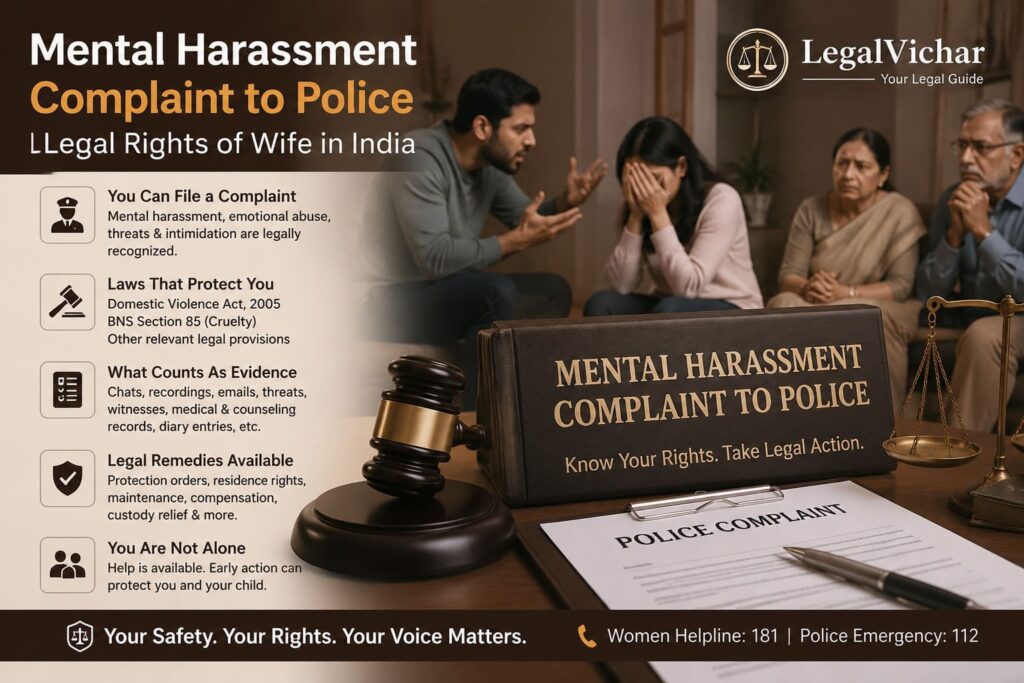
Sometimes emotional abuse becomes serious when police refuse to act immediately.
If you are confused about what to do when authorities delay or refuse to register your complaint, this practical guide explains the legal remedies available under Indian law.
Read: What to Do When Police Refuses to File FIRWhat Is Considered Mental Harassment in Marriage?
Mental harassment by husband is not limited to shouting or arguments. Every marriage has disagreements. Law usually becomes relevant when the behavior becomes continuous, controlling, humiliating, threatening, or emotionally damaging.
Some common examples include:
- Constant verbal abuse
- Humiliating the wife in front of family members
- Threatening divorce repeatedly
- Threatening suicide or self harm to manipulate
- Preventing the wife from meeting parents or friends
- Blaming her for everything happening in the family
- Financial control and emotional blackmail
- Creating fear inside the house
- Repeated accusations without basis
- Making the wife feel mentally unstable or worthless
In many households this pattern develops slowly. At first, the family thinks the husband is just angry or stressed. But after months or years, the woman becomes emotionally exhausted. Some stop speaking openly even with their own parents.
Mental abuse husband to wife situations are often harder to prove than physical violence because there may not be visible injuries. But Indian courts and authorities increasingly recognize emotional abuse as a serious issue, especially where it affects mental health, personal dignity, or safety of children.
Can You File a Mental Harassment Complaint to Police in India?
Yes. A mental harassment complaint to police can be filed if the conduct amounts to cruelty, intimidation, domestic violence, threats, harassment, or emotional abuse.
The police may examine:
- Nature of allegations
- Frequency of harassment
- Threats or intimidation
- Messages or recordings
- Impact on mental health
- Safety concerns for wife or child
- Whether there is risk of physical escalation
In many cities, women are first referred to:
- Women Cell
- Mahila Desk
- Protection Officer under Domestic Violence Act
- Family Counseling Unit
But if there are serious threats, intimidation, assault, blackmail, or danger to safety, direct police intervention may also happen.
A lot depends on the facts. For example, occasional marital arguments and continuous psychological abuse are treated very differently.
One practical thing families should understand is this: waiting too long sometimes makes situations worse. Especially where emotional abuse is mixed with controlling behavior, isolation, or self harm threats.
There are also situations where husbands threaten to injure themselves and then blame the wife or her family emotionally. This creates fear inside the family and sometimes forces the victim to stay silent. Such situations should not be ignored casually.
What Laws May Apply in Mental Harassment Cases?
Different laws may become relevant depending on the facts.
Protection of Women from Domestic Violence Act, 2005
This law is very important because domestic violence is not limited to physical assault. Emotional abuse, verbal abuse, psychological abuse, and economic abuse can also fall within its scope.
Under this law, a wife may seek:
- Protection orders
- Residence rights
- Monetary relief
- Compensation
- Custody related relief
- Protection from further harassment
The purpose is often preventive and protective, not just punitive.
Section 85 of Bharatiya Nyaya Sanhita
Cruelty by husband or relatives may attract criminal liability in serious situations involving mental or physical cruelty.
Criminal Intimidation Provisions
Threats involving harm, fear, coercion, or intimidation may also become relevant depending on circumstances.
Child Welfare Concerns
If a child is continuously exposed to abusive household conditions, courts may also consider the emotional environment while examining custody related issues.
What Is Proof of Mental Harassment?
One of the biggest questions people ask is: what is proof of mental harassment?
Unlike physical assault, emotional abuse usually develops behind closed doors. Because of this, victims often feel helpless and believe they have “no evidence”. That is not always true.
Evidence may include:
- WhatsApp chats
- Voice recordings
- Threatening messages
- Emails
- Medical records
- Psychological counseling records
- Witness statements
- Diary entries documenting incidents
- Photographs of damaged property
- Call recordings where legally permissible
- Evidence showing isolation or financial control
In modern legal disputes, digital evidence plays a major role. Even deleted chats sometimes become relevant if backups or screenshots exist.
Courts usually examine the overall pattern of behavior rather than one isolated incident.
For example:
A single angry argument may not amount to mental cruelty.
But repeated emotional abuse over several years combined with threats, humiliation, intimidation, and manipulation can become legally significant.
How can I document mental harassment is another common concern. Practically speaking, maintaining chronological records helps a lot. Many lawyers advise clients to preserve chats, maintain notes of incidents, and avoid deleting messages during ongoing disputes.
Is Mental Harassment a Crime?
Is mental harassment a crime depends on the facts and seriousness of conduct.
Not every marital disagreement becomes a criminal matter. But certain forms of emotional abuse may attract legal consequences when they involve:
- Cruelty
- Threats
- Intimidation
- Coercive control
- Abetment concerns
- Domestic violence
- Severe psychological harm
Indian courts have repeatedly observed that mental cruelty can be as damaging as physical violence.
For instance, constant humiliation, forcing isolation from parents, repeated threats, emotional manipulation involving self harm, or creating an atmosphere of fear inside the house may eventually cross the line from “family issue” to legal misconduct.
Many victims delay taking action because there are no physical injuries. Unfortunately, emotional abuse often escalates gradually.
What Is the Punishment for Mental Harassment?
What is the punishment for mental harassment depends entirely on the applicable legal provisions and seriousness of allegations.
In some situations, the court may focus more on protection and prevention rather than imprisonment. In more serious cases involving cruelty, intimidation, or criminal conduct, penal consequences may arise.
Mental harassment case punishment may include:
- Protection orders
- Restrictions on abusive conduct
- Monetary compensation
- Maintenance orders
- Residence related relief
- Criminal proceedings in serious cruelty cases
- Possible imprisonment depending on charges proved
A lot also depends on evidence quality and factual consistency.
Families should avoid exaggeration or false allegations because that can weaken genuine cases. At the same time, genuine emotional abuse should not be dismissed merely because there are no visible injuries.
Emotional abuse cases often become more stressful when people panic during police interaction.
Before visiting a police station, it helps to understand what rights a citizen actually has during questioning, detention, or investigation in India.
Know Your Rights During an Arrest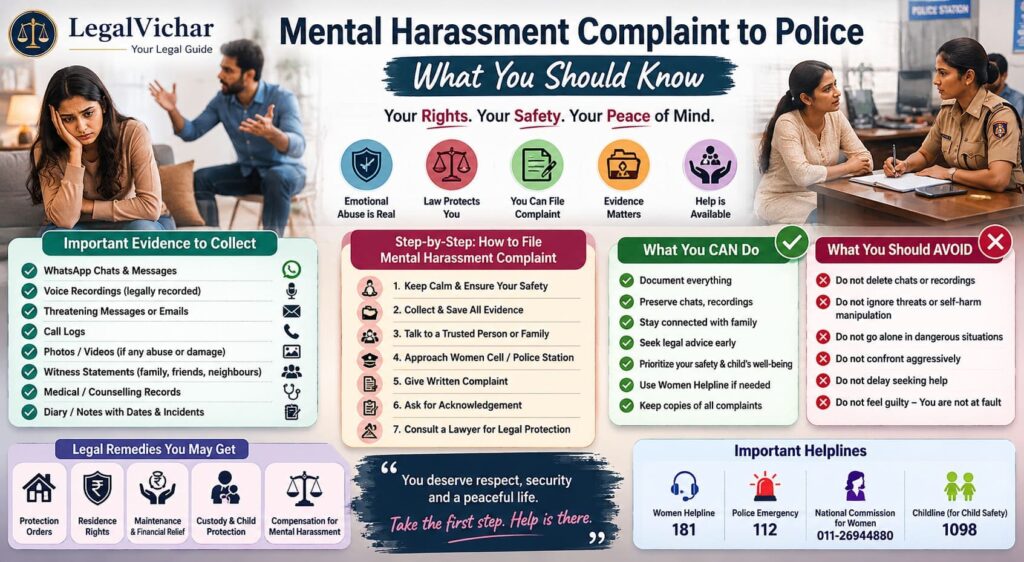
Mental Harassment Complaint to Police Before Things Escalate
Many people approach lawyers only after physical violence begins. But some situations show warning signs much earlier.
For example:
- The husband starts isolating the wife from family.
- He threatens self harm during arguments.
- There is constant shouting in front of the child.
- Financial pressure increases.
- The wife becomes emotionally numb or fearful.
- There is continuous humiliation inside the house.
In such situations, families often ask whether they should wait or act early.
Legally and practically, early intervention is usually safer.
A mental harassment complaint to police does not always mean immediate arrest or criminal trial. Sometimes the objective is:
- Creating official record
- Seeking protection
- Preventing escalation
- Initiating counseling
- Protecting child welfare
- Ensuring safety
This distinction is important because many families avoid legal consultation out of fear that “everything will become extreme immediately”.
What Is the Best Way to Report Harassment?
What is the best way to report harassment depends on the urgency and seriousness.
In practical terms, families often take these steps:
- Document incidents carefully
- Preserve digital evidence
- Consult local advocate
- Approach women cell or police station
- Avoid direct confrontation during volatile situations
- Ensure child safety
- Seek psychological support if needed
In serious cases involving threats or immediate danger, emergency police assistance may become necessary.
One mistake many families make is trying to “manage” serious emotional abuse privately for years. Sometimes the situation improves. Sometimes it becomes much worse.
Can Family Members Support the Victim Legally?
Yes. Parents and siblings often become important support systems in emotional abuse situations.
In India, many victims remain silent because they fear social judgment, pressure from relatives, or concerns about children.
A supportive family can help by:
- Encouraging documentation
- Providing emotional support
- Consulting legal professionals early
- Helping preserve evidence
- Avoiding forced reconciliation where safety is at risk
- Assisting with child related arrangements
Sometimes victims themselves do not recognize the seriousness of emotional abuse because the behavior has become normalized over years.
Practical Risks Families Should Not Ignore
There are certain red flags families should take seriously:
- Threats involving self harm
- Aggressive emotional manipulation
- Continuous isolation from loved ones
- Fear inside the house
- Verbal abuse in front of children
- Financial dependency combined with control
- Monitoring phone calls or movement
- Repeated humiliation
These situations may eventually affect:
- Mental health
- Child development
- Financial stability
- Personal safety
- Future legal disputes
In custody disputes, courts may also examine whether the child was exposed to emotionally harmful domestic conditions.
Financial fear is one of the biggest reasons why many women silently tolerate emotional abuse for years.
If you are worried about maintenance, property rights, child custody, or financial support after separation, this guide explains the practical legal position in India.
Read: Rights of Woman in DivorceCan WhatsApp Messages and Recordings Be Used as Evidence?
Yes, digital evidence is increasingly important in emotional abuse disputes.
Courts may consider:
- WhatsApp chats
- Emails
- Voice recordings
- Screenshots
- Call records
- Social media messages
However, evidence should be preserved properly. Manipulated or edited material can create complications.
Under Indian evidence principles, authenticity and reliability matter significantly.
For example, if abusive messages show repeated threats, intimidation, or manipulation over a long period, they may support the victim’s version of events.
Is It Worth Reporting Harassment?
Is it worth reporting harassment depends on the seriousness and impact of the situation.
Many people fear social stigma or family pressure. Some are worried about financial consequences. Others fear retaliation.
But in genuinely abusive situations, early legal consultation often helps people understand their options calmly instead of waiting for crisis situations.
Not every complaint ends in courtroom litigation. Sometimes legal intervention itself changes behavior patterns because boundaries become clear.
How Courts Usually View Emotional Abuse
Indian courts generally examine the entire marital conduct instead of isolated incidents.
Factors often considered include:
- Consistency of abusive behavior
- Mental impact on victim
- Nature of threats
- Public humiliation
- Isolation tactics
- Conduct towards child
- Financial control
- Pattern of intimidation
Courts also understand that emotional abuse may not always have direct witnesses because such conduct usually happens inside private domestic spaces.
False allegations and emotionally charged complaints can create legal complications later.
This detailed guide explains how false FIR cases are viewed under Indian law and why factual accuracy and proper evidence matter during legal disputes.
Read the guide on False FIR Punishment in IndiaFAQs on Mental Harassment Complaint to Police
Common questions people usually search when facing emotional abuse, verbal harassment, or mental cruelty in marriage.
Yes. A mental harassment complaint to police may be filed where emotional abuse, cruelty, threats, intimidation, or domestic violence related conduct is involved.
Proof may include chats, recordings, emails, witness statements, counseling records, diary entries, or other evidence showing repeated emotional abuse.
In certain situations, yes. Mental harassment involving cruelty, intimidation, threats, or domestic violence may attract legal consequences under Indian law.
Maintain records of incidents, preserve chats and recordings, keep copies of threatening messages, and avoid deleting digital evidence.
Depending on the circumstances, legal remedies including domestic violence proceedings, criminal complaints, compensation claims, or matrimonial actions may be available.
Repeated abusive messages, recordings, witness statements, or evidence showing continuous humiliation or threats may become relevant.
Seek emotional support, preserve evidence, consult an advocate, prioritize safety, and avoid ignoring serious warning signs.
Provide factual details calmly, preserve evidence, maintain timeline of incidents, and approach the appropriate police station or women support authority.
In many mental harassment cases, mobile phones, chats, screenshots, and digital conversations become extremely important evidence.
Before deleting anything from your phone during an emotional dispute, read how police and investigators may legally examine digital devices and communication records in India.
Read: Can the Police Check Your Phone in India?Conclusion
Mental harassment inside marriage is often ignored because there may be no visible injuries. But emotional abuse can slowly damage confidence, mental health, family relationships, and even the emotional wellbeing of children living in that environment.
Not every difficult marriage becomes a legal case. But when fear, humiliation, manipulation, threats, and continuous emotional pressure become part of daily life, families should not simply wait and hope things improve on their own.
A mental harassment complaint to police is sometimes less about punishment and more about protection, documentation, safety, and preventing further escalation.
If someone is facing a similar situation, early legal guidance may help them understand their rights calmly and practically before the situation becomes more serious.
Pingback: What Is a Contested Divorce in India? Process, Evidence and Cost