
A social media account with one lakh followers instantly creates an impression of authority. Whether it is an influencer promoting skincare products, a startup founder selling courses, or a business running Instagram ads, follower count often influences trust. Because of this pressure, many individuals and brands quietly purchase fake followers, likes, and engagement to appear more popular than they actually are.
At first glance, buying followers may look like a harmless marketing shortcut. After all, there is no police officer standing outside Instagram accounts checking follower authenticity. However, the legal position becomes more serious when fake followers are used to mislead consumers, attract business deals, manipulate advertising value, or create false credibility online. This is where an important question starts arising for businesses and creators alike, is buying fake followers illegal under Indian law and social media platform policies?
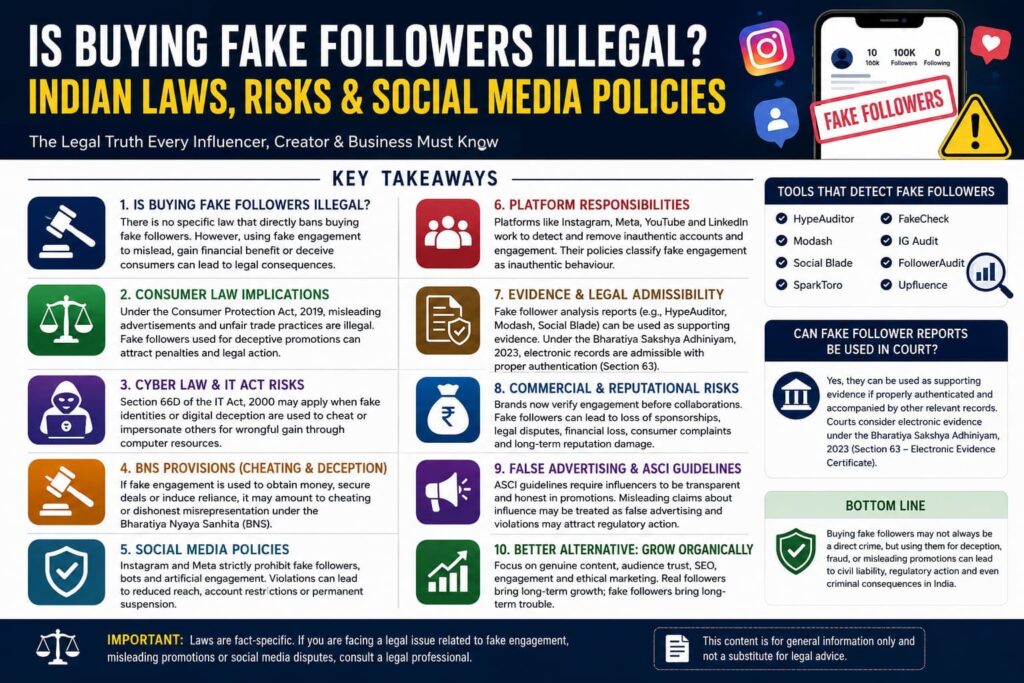
In India, there is no single law that directly says “buying fake followers is illegal.” But that does not mean the practice is legally safe. Depending on how fake engagement is used, it can trigger issues under consumer protection laws, cyber law provisions, platform policies, digital fraud principles, advertising regulations, and even criminal provisions relating to cheating or impersonation.
For businesses, influencers, agencies, and content creators, the bigger risk is not only legal liability but also digital reputation damage. Brands now use advanced analytics tools to detect fake engagement before signing sponsorship deals. Social media platforms actively suspend accounts involved in artificial engagement practices. In some situations, fake follower manipulation can even become evidence in disputes involving fraud, misleading advertising, or contractual deception.
This article explains how Indian laws, platform policies, cyber law provisions, and practical legal risks apply to fake followers and digital deception.
What Are Fake Followers and Fake Engagement?
Fake followers are artificially generated social media accounts created through bots, inactive profiles, click farms, or paid follower networks. These accounts are usually purchased to increase follower count quickly.
Fake engagement may include:
- Purchased likes
- Artificial comments
- Bot-generated shares
- Fake subscribers
- Automated views
- Engagement pods
- Click farm interactions
Many people buy these services through online panels promising:
- “10,000 followers in 24 hours”
- “Instant verified engagement”
- “Real-looking followers”
- “Safe Instagram growth”
However, most of these followers are either:
- bots,
- inactive accounts,
- hacked accounts,
- or fake profiles created solely for engagement manipulation.
The issue becomes legally sensitive when fake engagement creates a false public impression intended to influence consumer decisions or commercial relationships.
Is Buying Fake Followers Illegal in India?
There is no direct Indian statute specifically criminalising the purchase of fake followers. However, the activity can become legally problematic depending on intention, usage, and resulting harm.
The legal risk generally increases when fake followers are used for:
- misleading consumers,
- securing paid brand collaborations,
- falsely inflating influence,
- obtaining advertising contracts,
- manipulating public trust,
- deceiving investors or customers.
In simple words, buying followers privately for vanity may not immediately attract criminal prosecution. But using fake engagement commercially or deceptively can potentially fall under:
- cheating,
- digital deception,
- false advertising,
- unfair trade practices,
- cyber fraud,
- impersonation,
- or contractual misrepresentation.
This distinction is important.
Why Fake Followers Can Become a Legal Problem
A business or influencer with fake followers may appear more trustworthy than they actually are. Brands often pay influencers based on:
- follower count,
- engagement rate,
- audience reach,
- and perceived influence.
If those metrics are artificially manipulated, the brand may suffer financial loss after paying for sponsorships that never deliver real audience engagement.
This is where legal consequences may begin.
For example:
A company hires an influencer with 5 lakh Instagram followers for a paid campaign. Later, analytics reveal that 70% of followers were bots purchased through third-party services. The campaign fails, engagement remains negligible, and the company loses advertising money.
In such situations, allegations may involve:
- fraudulent misrepresentation,
- unfair trade practices,
- breach of contract,
- cheating,
- or deceptive marketing practices.
Consumer Protection Act and False Advertising in India
The Consumer Protection Act, 2019 plays a significant role in cases involving fake engagement used for commercial gain.
Under Indian consumer law, misleading advertisements and unfair trade practices can attract legal scrutiny.
If a business or influencer creates a false impression of popularity using fake followers and consumers rely on that credibility while purchasing products or services, authorities may examine whether such conduct amounts to deceptive advertising.
The Central Consumer Protection Authority (CCPA) has already issued influencer advertising guidelines requiring transparency and authenticity in endorsements.
In serious commercial situations, fake follower manipulation may potentially be interpreted as:
- deceptive representation,
- misleading endorsement,
- or unfair trade practice.
This becomes especially relevant when:
- financial products are promoted,
- health claims are made,
- investment advice is sold,
- or consumers spend money relying on perceived authority.
ASCI Guidelines and Influencer Responsibility
The Advertising Standards Council of India (ASCI) has issued guidelines for influencers and digital advertisers.
These guidelines expect:
- honest representation,
- proper disclosure of paid promotions,
- transparency in advertising,
- and responsible influencer conduct.
Although ASCI is not a criminal enforcement body, violations may:
- damage credibility,
- affect brand partnerships,
- trigger complaints,
- or contribute to regulatory scrutiny.
An influencer with fake engagement may misrepresent their actual reach to brands and consumers, creating compliance concerns.
Can Buying Fake Followers Amount to Cheating Under Indian Law?
In some situations, yes.
Under the Bharatiya Nyaya Sanhita (BNS), cheating provisions may become relevant if fake engagement is intentionally used to deceive someone for wrongful gain.
If a person knowingly presents fake influence metrics to:
- secure money,
- obtain sponsorships,
- attract investors,
- or induce business reliance,
the issue may move beyond a simple social media violation.
The legal analysis would depend on:
- intention,
- financial loss,
- deception,
- reliance,
- and evidence.
Courts generally examine whether:
- dishonest representation existed,
- another party relied on it,
- and wrongful gain or loss occurred.
Relevant IT Act Provisions and Cyber Law Risks
Section 66D of the Information Technology Act, 2000
Section 66D deals with cheating by personation using computer resources.
While fake followers themselves may not automatically trigger Section 66D, problems may arise where:
- fake profiles impersonate real individuals,
- automated bots misrepresent human interaction,
- or deceptive online practices are used for financial gain.
For example:
- using fake identities,
- fake customer reviews,
- fake influencer accounts,
- or manipulated engagement networks,
may strengthen allegations of digital deception or online fraud.
In severe cases involving organised engagement scams, authorities may investigate:
- cyber fraud,
- identity misuse,
- impersonation,
- or dishonest digital practices.
Responsibilities of Social Media Platforms
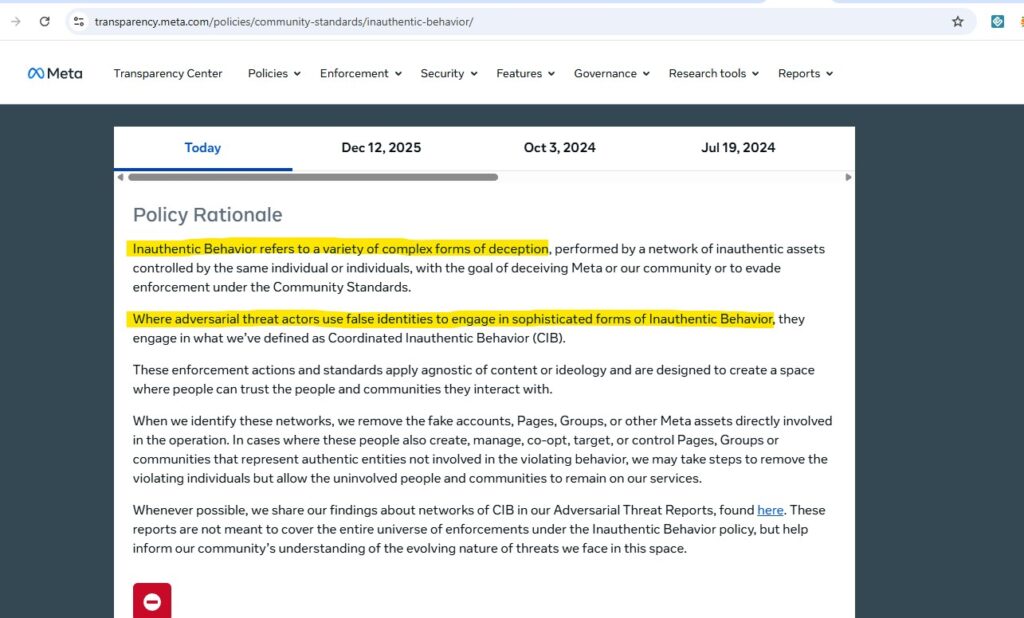
Social media platforms are not passive observers anymore. Platforms such as:
- Instagram,
- YouTube,
- Facebook,
- TikTok,
- LinkedIn,
- and X (Twitter),
actively prohibit artificial engagement manipulation.
Most platform policies ban:
- fake followers,
- engagement bots,
- automated likes,
- spam interactions,
- and artificial amplification.
Instagram’s policies specifically prohibit:
- fake engagement,
- misleading activity,
- automated account growth,
- and platform manipulation.
Consequences may include:
- shadow bans,
- reduced reach,
- monetisation restrictions,
- account suspension,
- content suppression,
- permanent bans.
Platforms also use machine-learning systems to identify:
- sudden follower spikes,
- bot activity,
- suspicious engagement patterns,
- geographic inconsistencies,
- automated interactions.
This means even if fake followers initially increase numbers, platforms often remove them later.
Tools That Detect Fake Followers and Engagement
Brands, agencies, and legal teams now use specialised analytics tools to detect suspicious engagement.
Common fake follower analysis tools include:
- HypeAuditor
- Modash
- Social Blade
- SparkToro
- FakeCheck
- IG Audit
- FollowerAudit
- Upfluence
These tools analyse:
- engagement quality,
- suspicious follower patterns,
- inactive accounts,
- audience authenticity,
- bot indicators,
- abnormal growth spikes.
For businesses, these reports help verify influencer authenticity before signing contracts.
Can Fake Follower Analysis Reports Be Used as Court Evidence?
This is a very important practical question.
In India, reports generated by fake follower analytics tools are not automatically conclusive proof. However, they may still be relevant as supporting digital evidence depending on:
- authenticity,
- expert testimony,
- corroborating records,
- metadata,
- and evidentiary compliance.
Under the Bharatiya Sakshya Adhiniyam, 2023 (which replaced the Indian Evidence Act), electronic evidence may become admissible if legal requirements are properly followed.
Digital evidence may include:
- screenshots,
- analytics reports,
- engagement reports,
- account activity logs,
- platform communications,
- metadata,
- server records.
A Section 63 certificate (electronic evidence certification under the Bharatiya Sakshya Adhiniyam framework replacing old Section 65B principles) may become important when presenting electronic records before courts.
However, courts usually prefer:
- corroborative evidence,
- platform-generated records,
- expert testimony,
- and complete contextual proof.
A fake follower detection report alone may not guarantee success in litigation, but it can support allegations of deceptive practices or contractual misrepresentation.
Can Businesses Sue Influencers for Fake Followers?
Potentially, yes.
If an influencer knowingly inflates engagement statistics and a business suffers financial loss after relying on those representations, disputes may arise relating to:
- breach of contract,
- misrepresentation,
- deceptive marketing,
- unfair trade practices,
- or cheating.
Many influencer agreements now include:
- authenticity clauses,
- audience quality verification,
- fraud warranties,
- engagement disclosure requirements.
Brands increasingly conduct due diligence before collaborations.
Is Buying Instagram Followers Legal?
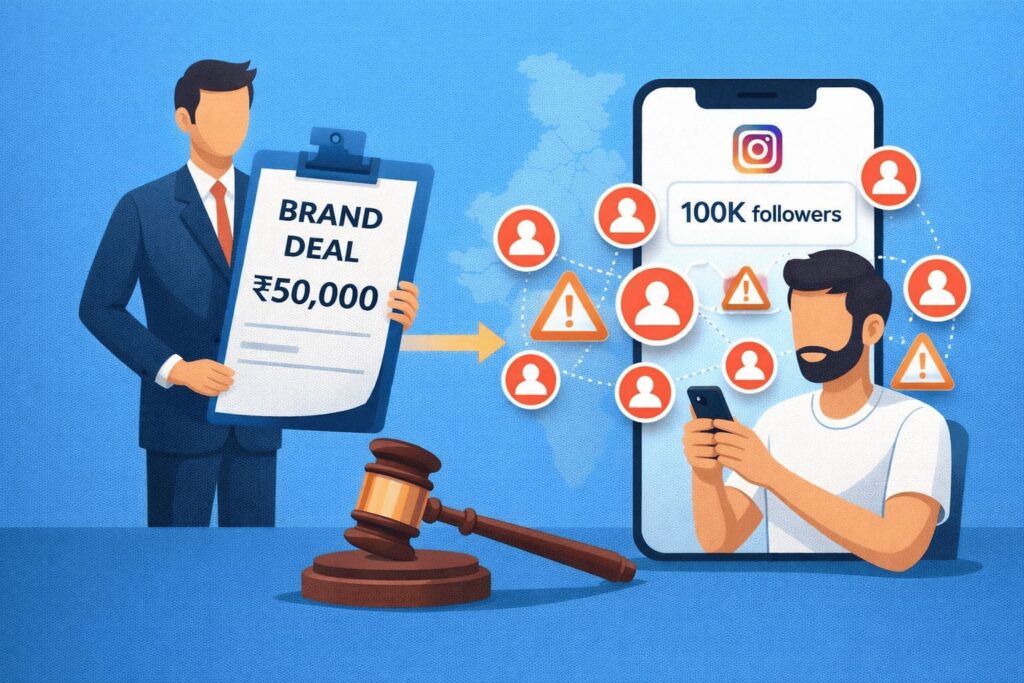
Technically, purchasing followers itself is not specifically criminalised by Indian legislation. However, legality changes depending on:
- how the followers are used,
- whether deception occurs,
- whether consumers or businesses suffer losses,
- and whether false claims are made commercially.
If the fake engagement is used merely for vanity without causing deception, criminal liability may be less likely.
But when fake followers are used to:
- secure endorsements,
- influence purchasing decisions,
- falsely claim authority,
- or attract financial gain,
the legal risk becomes significantly higher.
You may also read our detailed guide on <a href=”/is-buying-instagram-followers-legal-in-india”>Is Buying Instagram Followers Legal in India? A Practical Guide for Influencers and Businesses</a> for a platform-specific legal analysis.
Digital Deception and Reputation Damage
One aspect people often ignore is reputational collapse.
Today, consumers are increasingly aware of fake engagement practices. Brands regularly audit influencer metrics before collaborations. A fake follower scandal can seriously damage:
- professional credibility,
- client trust,
- advertising relationships,
- public reputation.
For lawyers, consultants, financial advisors, doctors, coaches, or educators, credibility matters more than vanity numbers.
A single exposure report showing purchased engagement can reduce years of trust-building efforts.
Could Fake Followers Affect Criminal or Civil Investigations?
In some situations, yes.
Suppose a fraudulent investment scheme is promoted through artificially inflated influencer accounts showing fake authority and fake social proof. Investigators may examine:
- digital manipulation,
- deceptive marketing,
- misleading claims,
- online inducement,
- and financial fraud.
Similarly, fake engagement evidence may become relevant in:
- advertising disputes,
- influencer contract litigation,
- cybercrime investigations,
- consumer complaints,
- defamation matters,
- deceptive trade practice cases.
Digital footprints rarely disappear completely.
Practical Risks of Buying Fake Followers
Many people focus only on legality and ignore practical consequences.
Here are some real risks:
1. Account Suspension
Platforms may remove fake followers or suspend accounts.
2. Reduced Organic Reach
Algorithms may suppress suspicious engagement activity.
3. Loss of Brand Deals
Brands increasingly audit influencer authenticity.
4. Reputation Damage
Public exposure can permanently affect credibility.
5. Consumer Complaints
Misleading digital authority may attract complaints.
6. Legal Disputes
Businesses may allege contractual deception.
7. Ad Performance Problems
Fake followers do not convert into genuine customers.
How to Grow Followers Legally and Safely
Instead of artificial growth tactics, businesses should focus on:
- genuine content,
- audience trust,
- search visibility,
- organic engagement,
- educational content,
- ethical marketing.
Effective long-term strategies include:
- SEO-driven content creation,
- educational reels,
- authority-based blogging,
- email marketing,
- collaborations,
- webinars,
- audience engagement.
Legal professionals and businesses should focus on sustainable digital authority rather than vanity metrics.
If your social media issue also involves privacy concerns or unlawful access to digital devices, you may find our guide on Can the Police Check Your Phone in India? useful in understanding digital rights and online investigations. Similarly, disputes involving false allegations or malicious digital complaints may overlap with principles discussed in our article on False FIR Punishment in India.
Frequently Asked Questions (FAQs)
Fake followers and Instagram compliance
Common questions around fake followers, engagement manipulation, platform rules, and whether such activity can create legal or commercial risk.
Buying fake followers is not expressly banned by a single Indian law. However, it may create legal problems if fake engagement is used for deception, misleading advertising, cheating, or commercial fraud.
Yes. Instagram prohibits artificial engagement practices including fake followers, bots, and engagement manipulation. Accounts may face reduced reach, restrictions, or suspension.
They may be used as supporting electronic evidence if properly authenticated and supported by admissible digital records under Indian evidence laws.
Section 66D may become relevant where fake identities, impersonation, or deceptive digital practices are used for cheating through computer resources.
Yes. If brands suffer financial losses due to misleading follower claims or manipulated engagement statistics, contractual or civil disputes may arise.
Yes. Artificial likes and engagement may violate platform policies and contribute to deceptive online representation.
Conclusion
Buying fake followers may look like an easy shortcut to online popularity, but the legal and practical risks are growing rapidly. Indian law may not specifically criminalise follower purchases in simple terms, yet digital deception, misleading advertising, cheating, unfair trade practices, and cyber fraud principles can become relevant depending on how fake engagement is used.
More importantly, social media credibility today is increasingly measurable. Brands, consumers, platforms, and even legal investigators now use sophisticated analytics tools to identify suspicious engagement patterns. What once appeared to be a harmless vanity tactic can quickly become a reputational liability or legal dispute.
For businesses, influencers, professionals, and creators in India, genuine authority remains far more valuable than inflated numbers. Sustainable audience growth built on trust, transparency, and authentic engagement is not only safer legally, it is also far more effective in the long run.