
Marriage disputes in India usually do not break in one day. In many homes, things slowly become emotionally exhausting. Communication stops. Trust disappears. Every conversation turns into blame, silence, anger, or emotional pressure. Sometimes families interfere. Sometimes financial issues make things worse. In a few situations, allegations become serious enough to involve police complaints, medical reports, recordings, or court notices.
That is usually where people begin searching online for one difficult question: What Is a Contested Divorce.
Most people searching this are not curious readers. They are emotionally tired spouses trying to understand whether the law can realistically help them or whether litigation will make life more complicated.
A contested divorce in India is not only about ending a marriage. It becomes a legal battle over allegations, evidence, financial responsibility, mental cruelty, child custody, reputation, and sometimes even criminal complaints. Family Courts do not decide cases based on emotions alone. Courts examine conduct, evidence, credibility, and the overall circumstances of the marriage.
In many cases, people enter litigation without understanding how long the process can continue, how evidence is evaluated, or how maintenance and interim applications affect both parties financially and emotionally.
This article explains What Is a Contested Divorce in practical language. Not just legal theory. The focus here is on how contested divorce cases actually unfold in India, what risks people should understand before filing, and how courts generally approach evidence and matrimonial disputes.

What Is a Contested Divorce
What Is a Contested Divorce under Indian law? A contested divorce happens when one spouse wants divorce but the other spouse disagrees either with the divorce itself or with the allegations made in the petition.
Unlike mutual consent divorce where both spouses jointly agree to separate, a contested divorce involves litigation before the Family Court. The court examines evidence, hears both parties, and then decides whether legal grounds for divorce are established.
In India, contested divorce petitions are commonly filed under:
- Hindu Marriage Act, 1955
- Special Marriage Act, 1954
- Indian Divorce Act for Christians
- Muslim personal laws depending on circumstances
The most commonly used grounds include cruelty, desertion, adultery, mental disorder, conversion, and irretrievable breakdown arguments in practical litigation.
Many people asking What Is a Contested Divorce are actually trying to understand one thing quietly in their mind:
“Will the court believe my side?”
That fear is very real because matrimonial litigation often becomes emotionally personal and legally unpredictable.
Contested and Uncontested Divorce Meaning
The difference between contested and uncontested divorce meaning is important because both processes work very differently.
In mutual consent divorce:
- Both spouses agree to separate
- Settlement terms are negotiated
- Litigation is shorter
- Emotional conflict is comparatively lower
In contested divorce:
- One spouse disputes the divorce
- Allegations are challenged
- Evidence becomes important
- Hearings may continue for years
- Maintenance and interim applications may arise
Many couples initially attempt settlement but eventually move into contested litigation because disputes regarding money, family interference, child custody, or allegations of cruelty become difficult to resolve.
Grounds for Contested Divorce in India
Family Courts do not grant divorce simply because the marriage has become unhappy. Legal grounds must usually be established with supporting facts and evidence.
Some common grounds for contested divorce in India include:
Cruelty
Cruelty may be physical or mental. Courts examine repeated conduct rather than isolated emotional arguments.
Examples may include:
- Physical assault
- Serious verbal abuse
- Threats or intimidation
- False criminal allegations
- Public humiliation
- Emotional manipulation
- Financial control or harassment
Desertion
When one spouse leaves the matrimonial relationship without reasonable cause for a legally relevant period.
Adultery
Direct evidence is rare. Courts sometimes rely on circumstantial evidence and conduct patterns.
Mental Disorder
The condition must seriously affect marital life and evidence generally becomes medically important.
Conversion or Renunciation
In certain circumstances these may become legal grounds under personal laws.
In practical litigation, cruelty remains one of the most commonly pleaded grounds in contested divorce matters.
Sometimes cruelty in marriage does not leave visible injuries. It slowly affects mental peace, confidence, and emotional stability.
Mental Harassment Complaint to Police: Legal Rights of Wife Against Emotional Abuse by HusbandContested Divorce by Husband
A large number of online searches regarding What Is a Contested Divorce now come from husbands trying to understand how Family Courts evaluate allegations and evidence.
Some husbands enter litigation after:
- repeated domestic disputes
- police complaints
- mental harassment allegations
- false dowry accusations according to their version
- long periods of separation
- failed reconciliation attempts
Indian courts do not automatically assume one side is truthful merely because allegations are emotional. Judges examine consistency, documents, conduct, timelines, witness statements, electronic records, and surrounding circumstances.
Still, many husbands underestimate one important thing. Angry messages, threatening WhatsApp chats, abusive emails, or reckless social media behaviour often damage their own credibility during litigation.
That becomes relevant even in cases where genuine matrimonial disputes exist.
Matrimonial disputes sometimes escalate into criminal allegations. In certain situations, people also fear false complaints and legal misuse during emotional conflicts.
False FIR Punishment in India: 7 Years Jail? Know Your Rights for 2026Contested Divorce by Wife
Women may file contested divorce petitions in situations involving:
- domestic violence
- emotional abuse
- financial neglect
- alcoholism
- extra marital relationships
- abandonment
- unsafe living conditions
In many cases, women simultaneously pursue:
- maintenance proceedings
- Domestic Violence Act remedies
- child custody matters
- criminal complaints
This creates overlapping litigation which emotionally and financially affects both sides.
Contested Divorce Procedure
Understanding contested divorce procedure helps people prepare realistically before entering Family Court litigation.
Filing of Petition
The divorce petition is filed before the appropriate Family Court.
Issuance of Notice
The other spouse receives legal notice and an opportunity to respond.
Written Statement
The respondent files reply denying or explaining allegations.
Mediation
Most Family Courts attempt reconciliation or mediation before trial proceeds.
Interim Applications
Applications regarding:
- maintenance
- litigation expenses
- child custody
- residence rights
may be filed.
Evidence Stage
This becomes one of the most important phases in contested divorce cases.
Cross Examination
Both parties may be questioned regarding allegations and evidence.
Final Arguments and Judgment
The court evaluates whether legal grounds for divorce are established.
What Happens in a Contested Divorce
People often search What Is a Contested Divorce expecting a simple legal explanation. The reality is emotionally heavier.
A contested divorce may involve:
- repeated court dates
- pressure from relatives
- emotional exhaustion
- financial stress
- police complaints
- settlement negotiations
- social reputation concerns
Sometimes both spouses begin litigation aggressively but later realise prolonged court battles affect mental peace more than expected.
That is why mediation occasionally succeeds even after serious disputes.
Divorce discussions often create fear about savings, property, investments, and future financial stability. Many people do not prepare until things become legally complicated.
How to Protect Assets From Divorce India: Legal and Practical Steps Before Things Get MessyHow Courts View Evidence in Contested Divorce Cases
One major misunderstanding in matrimonial litigation is that one recording or one photograph automatically proves cruelty.
Family Courts generally examine:
- consistency of allegations
- timeline of incidents
- supporting documents
- behaviour of both spouses
- credibility during testimony
MLCs and Medical Records
Medical documents may support allegations of physical assault, but courts still examine surrounding facts carefully.
Minor injuries alone may not automatically prove sustained cruelty.
Audio Recordings
Audio recordings sometimes become relevant in matrimonial disputes. However:
- authenticity may be challenged
- editing allegations may arise
- context becomes important
WhatsApp Chats and Emails
Electronic communication frequently appears in Family Court matters now. Angry conversations, threats, admissions, or abusive language may influence judicial assessment.
Photographs and Videos
Photographs may support claims but rarely decide cases independently without broader supporting evidence.
Many people use the terms FIR and police complaint interchangeably. In reality, both have different legal meaning and different consequences.
Difference Between FIR and Complaint: 7 Key Differences You Must KnowContested Divorce Time Period
Many people searching What Is a Contested Divorce are actually worried about one thing more than law itself.
“How long will this continue?”
The answer depends on:
- court workload
- evidence complexity
- interim applications
- willingness for settlement
- conduct of parties
In practical terms, contested divorce cases in India may continue for several years.
Cases involving:
- child custody disputes
- criminal proceedings
- financial disagreements
- extensive evidence
usually take longer.
How Many Hearings Are in Contested Divorce
There is no fixed number. Some matters settle early. Others continue through evidence and appeals.
People entering litigation should mentally prepare for repeated appearances and procedural delays.
How Much Does a Contested Divorce Cost
Legal costs vary significantly depending on:
- city
- lawyer experience
- complexity of allegations
- duration of litigation
Expenses may include:
- advocate fees
- drafting charges
- documentation expenses
- travel costs
- evidence preparation
- multiple proceedings
In metropolitan cities like Delhi, Mumbai, or Bangalore, contested matrimonial litigation can become financially demanding.
Is Alimony Mandatory in Contested Divorce
This is one of the most misunderstood areas in matrimonial law.
Alimony is not automatically guaranteed in every contested divorce matter.
Courts consider:
- income of both spouses
- financial dependency
- duration of marriage
- health conditions
- standard of living
- child responsibilities
In short duration marriages without children, courts may approach maintenance differently compared to long marriages involving financial dependency.
Still, interim maintenance applications are common during ongoing litigation.
Maintenance, custody, residence rights, and financial support are some of the biggest concerns women face during divorce proceedings in India.
Rights of Woman in Divorce (2026 Guide): Maintenance, Property & Custody Explained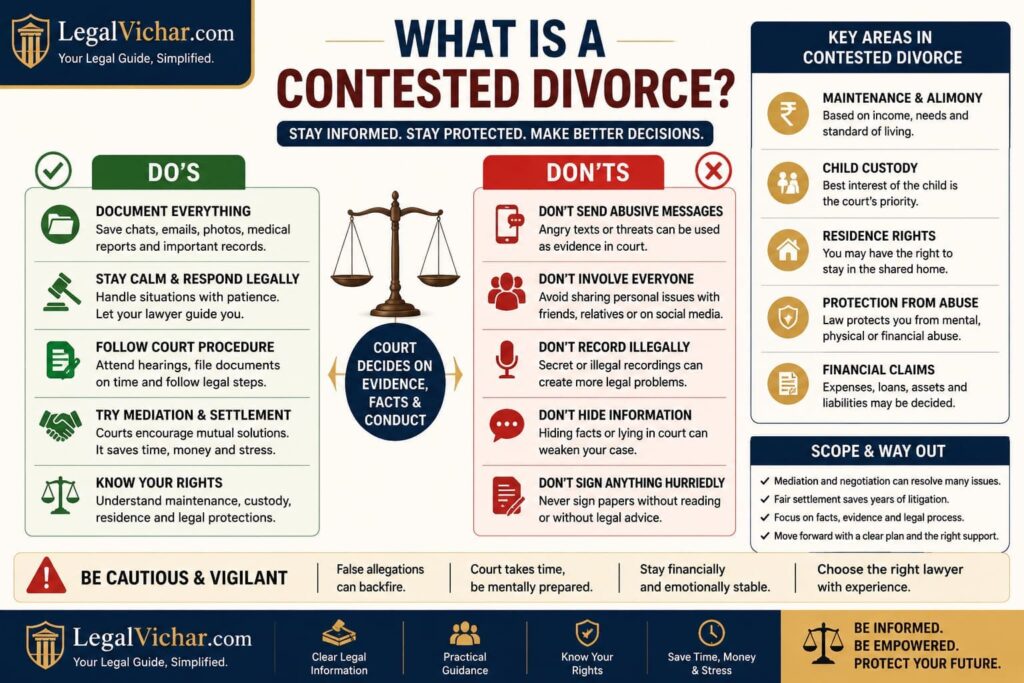
Is One Year Separation Mandatory for Contested Divorce
People often confuse mutual consent divorce requirements with contested divorce rules.
Under mutual consent divorce, one year separation generally becomes relevant before filing.
In contested divorce matters based on cruelty or other grounds, circumstances may differ depending on facts and applicable law.
Can Contested Divorce Be Withdrawn
Yes. A contested divorce petition may be withdrawn in certain situations.
Sometimes:
- reconciliation happens
- settlement is reached
- parties convert litigation into mutual consent divorce
Courts usually examine whether withdrawal affects pending connected proceedings.
What Happens If the Wife Wants Divorce But the Husband Does Not
This is actually a common situation in India.
If one spouse seeks contested divorce and the other opposes it, the Family Court examines whether legally recognised grounds exist.
Marriage cannot always be legally forced to continue merely because one spouse refuses consent. However, divorce also cannot be granted automatically without sufficient legal basis.
That balance becomes central in contested matrimonial litigation.
Contested Divorce Under Special Marriage Act
Interfaith marriages or civil marriages registered under the Special Marriage Act follow separate procedural provisions.
Still, the practical litigation issues remain similar:
- cruelty allegations
- evidence disputes
- maintenance claims
- emotional conflict
- prolonged hearings
Common Mistakes People Make During Contested Divorce Litigation
Some mistakes quietly damage matrimonial cases more than people realise.
Emotional Messaging
Threatening or abusive messages often become evidence later.
Social Media Behaviour
Public accusations or humiliating posts may affect credibility.
Illegal Access to Devices
Accessing private accounts without consent can create separate legal complications.
Ignoring Documentation
People rely only on emotions instead of preserving relevant records.
Filing Cases Without Preparation
Many litigants act emotionally after arguments without understanding long term consequences.
[INTERNAL LINK BOX: Legal Risks of Social Media Evidence]
Questions to Ask Before Hiring a Divorce Lawyer
Before choosing a matrimonial lawyer, practical questions matter.
- How much courtroom experience do they have in Family Court matters?
- What is their realistic strategy?
- How do they approach settlement opportunities?
- How do they manage evidence related disputes?
- What are the likely timelines?
- Are multiple connected proceedings expected?
Clients should avoid lawyers who promise guaranteed victory in emotionally complicated matrimonial disputes.
Practical Reality Most People Ignore
One uncomfortable truth about contested divorce litigation in India is this.
Even strong legal cases become emotionally exhausting over time.
Some litigants begin the process wanting punishment. Later they simply want peace, closure, and stability.
That emotional shift happens frequently in Family Courts.
Which is why good legal strategy is not only about aggressive litigation. Sometimes it is also about understanding when settlement protects mental health better than endless courtroom conflict.
In some family disputes, people approach the police expecting immediate help but feel confused when their complaint is ignored or not formally registered.
What to Do When Police Refuses to File FIR: Know Your Rights & Next StepsConclusion
What Is a Contested Divorce is not merely a legal definition. It is a difficult legal and emotional process where courts examine evidence, conduct, financial circumstances, and the overall reality of the marital relationship.
For some couples, contested litigation becomes necessary because reconciliation fails and allegations become serious. But people should enter the process with realistic expectations regarding timelines, evidence scrutiny, legal expenses, and emotional impact.
Family Courts in India do not function entirely on emotions or isolated allegations. Credibility, consistency, and practical circumstances matter deeply.
Anyone considering contested divorce should focus not only on anger or immediate reactions but also on long term consequences involving mental peace, financial stability, family relationships, and future legal exposure.
Careful legal advice, proper documentation, and emotionally balanced decision making usually matter far more than impulsive litigation.
Contested Divorce in India
Accordion-style FAQ with schema markup and a premium, human-friendly design.